Share This Article
If you are comparing restaurants in Soufrière, Rabot Restaurant offers a dining experience rooted in the landscape around it. The restaurant sits on Rabot Estate near Soufrière and pairs Saint Lucian produce, fish and seafood with cacao cultivated on the estate and by local island growers.
One thing to know upfront: cacao cuisine does not mean every course tastes like a chocolate dessert. Fresh cacao pulp can bring a bright, fruity note; roasted nibs add toast and texture; chefs infuse shells into drinks and stocks; and dark chocolate can deepen a sauce as readily as it completes a pudding.
Quick answer: Rabot Restaurant welcomes Rabot Hotel guests and external diners every day. The restaurant serves breakfast from 07:00 to 10:00, lunch from 12:00 to 15:00 and dinner from 18:00 to 22:00. Visitors who are not staying at the hotel should reserve, particularly for dinner.
In this guide to Rabot Restaurant
- Rabot Restaurant at a glance
- Where Rabot Restaurant is—and how it differs from dining in Soufrière town
- What cacao cuisine actually means
- How cacao is used in savoury food
- Breakfast, lunch or dinner?
- The Cacao Bar and dessert
- Plan a food-led day on Rabot Estate
- Practical tips for visiting
- Frequently asked questions
Rabot Restaurant at a glance
| Experience | Times | Why choose it |
|---|---|---|
| Breakfast | 07:00–10:00 | A relaxed start before an estate experience or a day around Soufrière |
| Lunch | 12:00–15:00 | Daylight views towards Petit Piton and an easy pairing with Project Chocolat |
| Dinner | 18:00–22:00 | The fullest expression of the cacao-cuisine menu; advance booking is sensible |
| Cacao Bar | 10:00–23:00* | Cacao cocktails, dessert wines, soft drinks and desserts with a Petit Piton backdrop |
Where Rabot Restaurant is—and how it differs from dining in Soufrière town
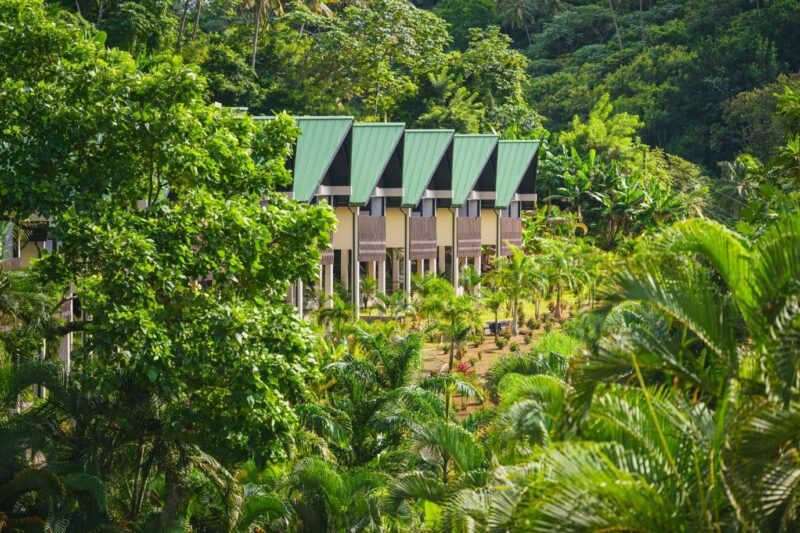
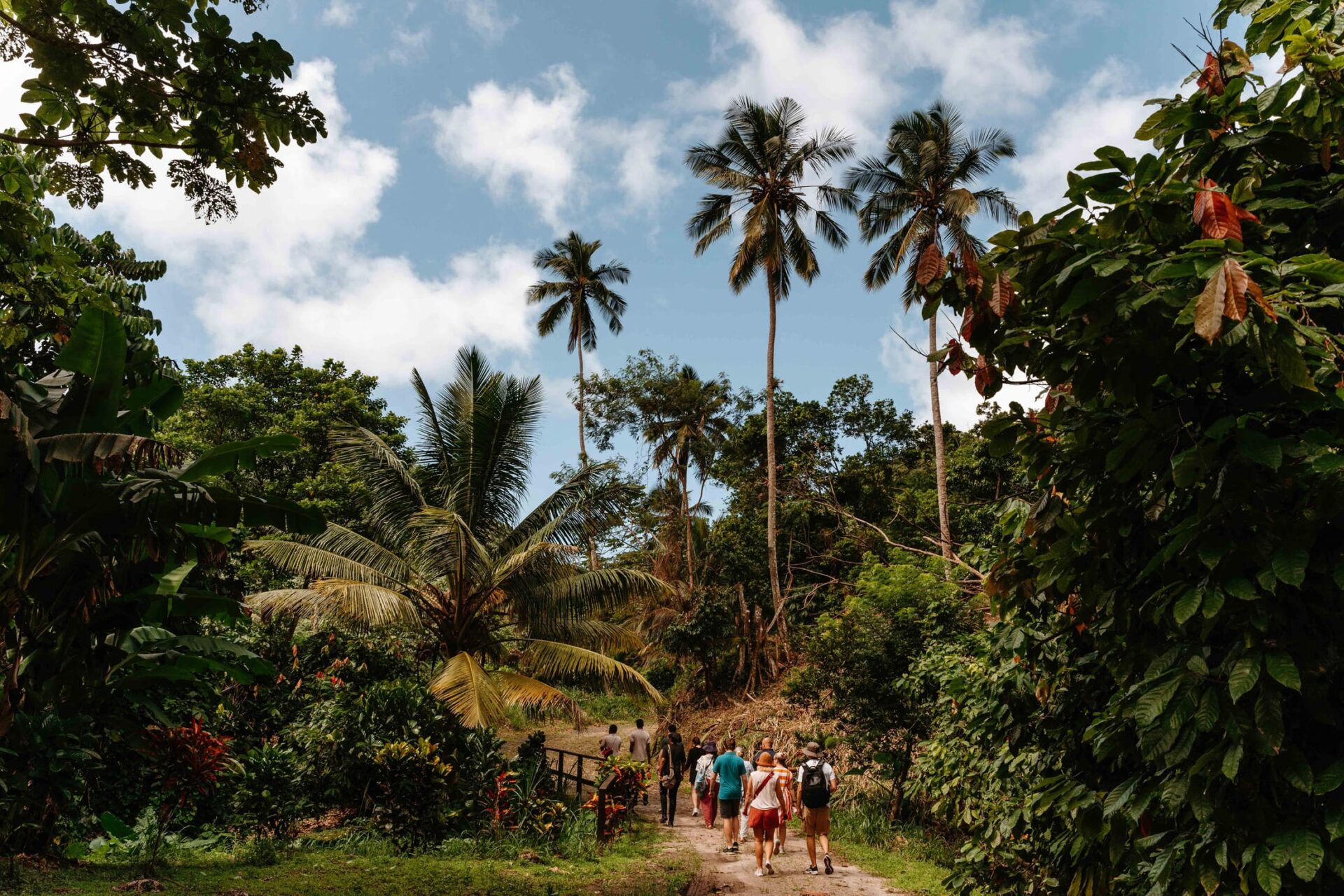
Rabot Restaurant is on the 140-acre Rabot Estate near Soufrière, in the south-west of Saint Lucia. It forms part of Rabot Hotel, but you do not need to be staying at the hotel to eat here. The restaurant welcomes external diners for breakfast, lunch, dinner and drinks.
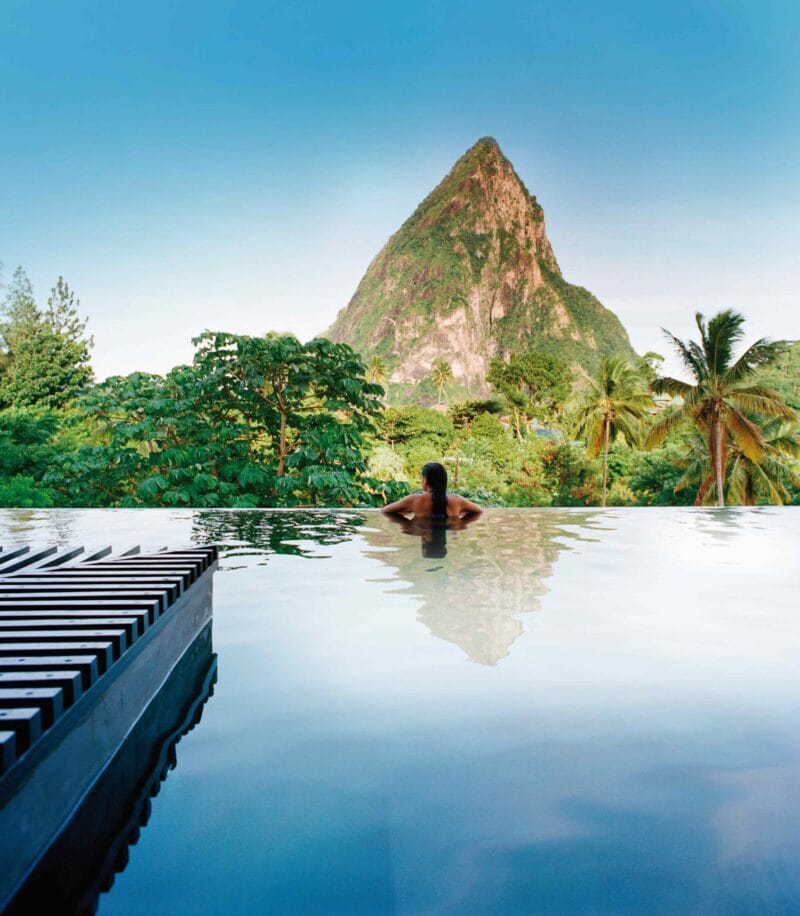
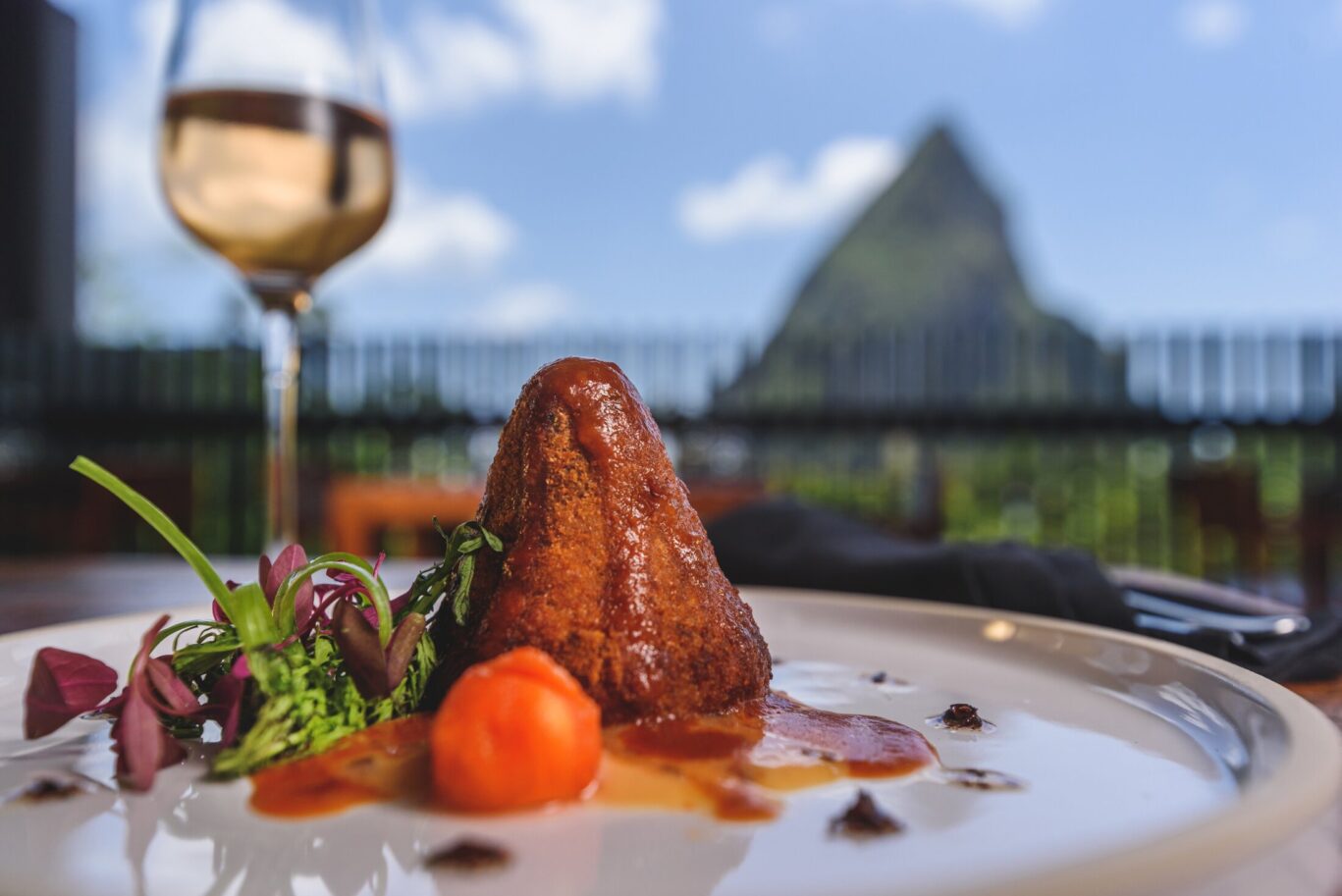
The setting distinguishes it from restaurants in the centre of Soufrière. The open-air dining space sits among rainforest and cacao trees, with a view towards Petit Piton rather than both peaks.
For travellers comparing restaurants in Soufrière, Rabot is therefore best understood as a destination meal close to town, rather than somewhere to drop into while walking around the waterfront. Allow time for the journey and arrange return transport in advance if you are visiting for dinner.
What cacao cuisine actually means
Cacao cuisine explores the whole cacao pod rather than treating chocolate as the only useful result. At Rabot Restaurant, cacao grown on Rabot Estate and by Saint Lucian grower partners appears alongside local fruit, vegetables, herbs, fish, seafood and meat.
- Cacao pulp: the fresh flesh around the beans is tangy and fruit-led, with a flavour often compared with lychee. It works in sorbets, cocktails and marinades.
- Cacao shells: roasted shells bring toasted, savoury and gently bitter notes. Chefs infuse them into tea, cooking stocks and spice mixtures.
- Cacao nibs: crushed pieces of roasted bean add texture and flavours that can be nutty, woody or tannic. They suit crusts, pesto, marinades and sauces.
- Saint Lucian dark chocolate: chefs use it selectively to balance a dressing or enrich a savoury sauce as well as to make desserts.
A useful way to think about cacao cuisine: the kitchen treats cacao as a family of ingredients. Pulp, shell, nib, butter and finished chocolate each behave differently, so a dish may taste fresh, toasted, aromatic or deeply savoury without tasting like a chocolate bar.
How cacao is used in savoury food
The most interesting dishes are often those in which cacao plays a supporting role. Rather than adding sweetness, it can sharpen fruit, deepen a sauce or give vegetables and fish a roasted edge.
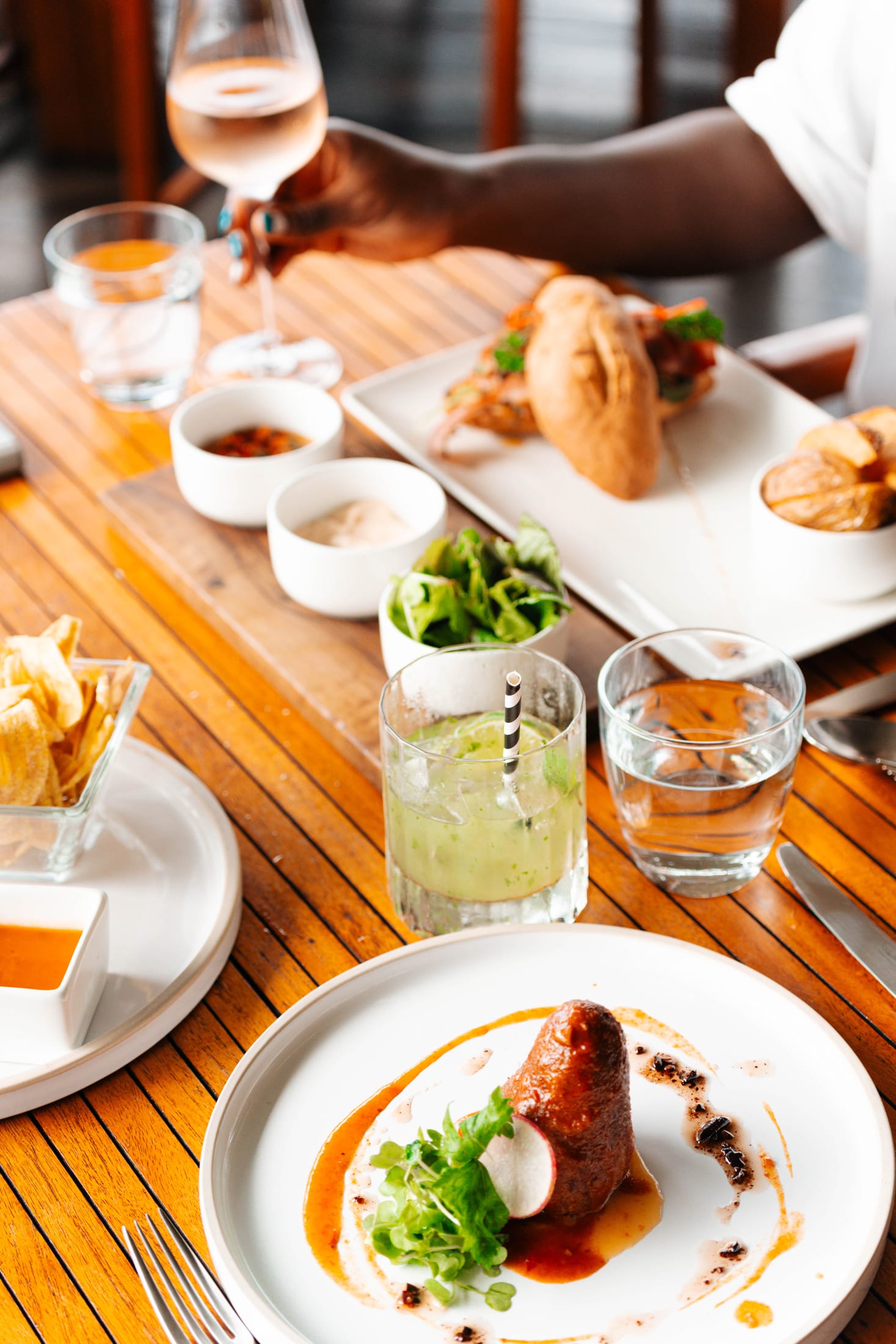
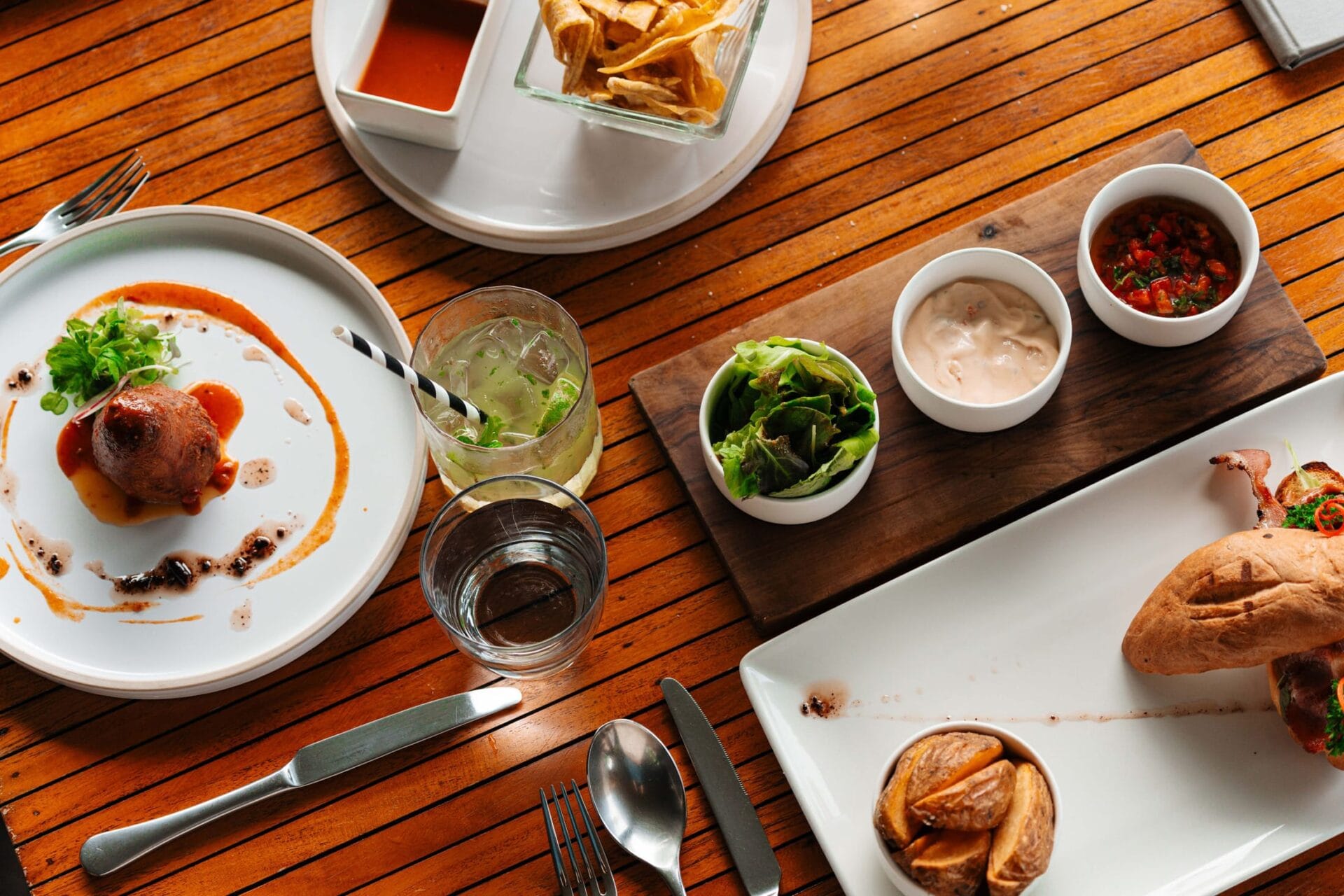
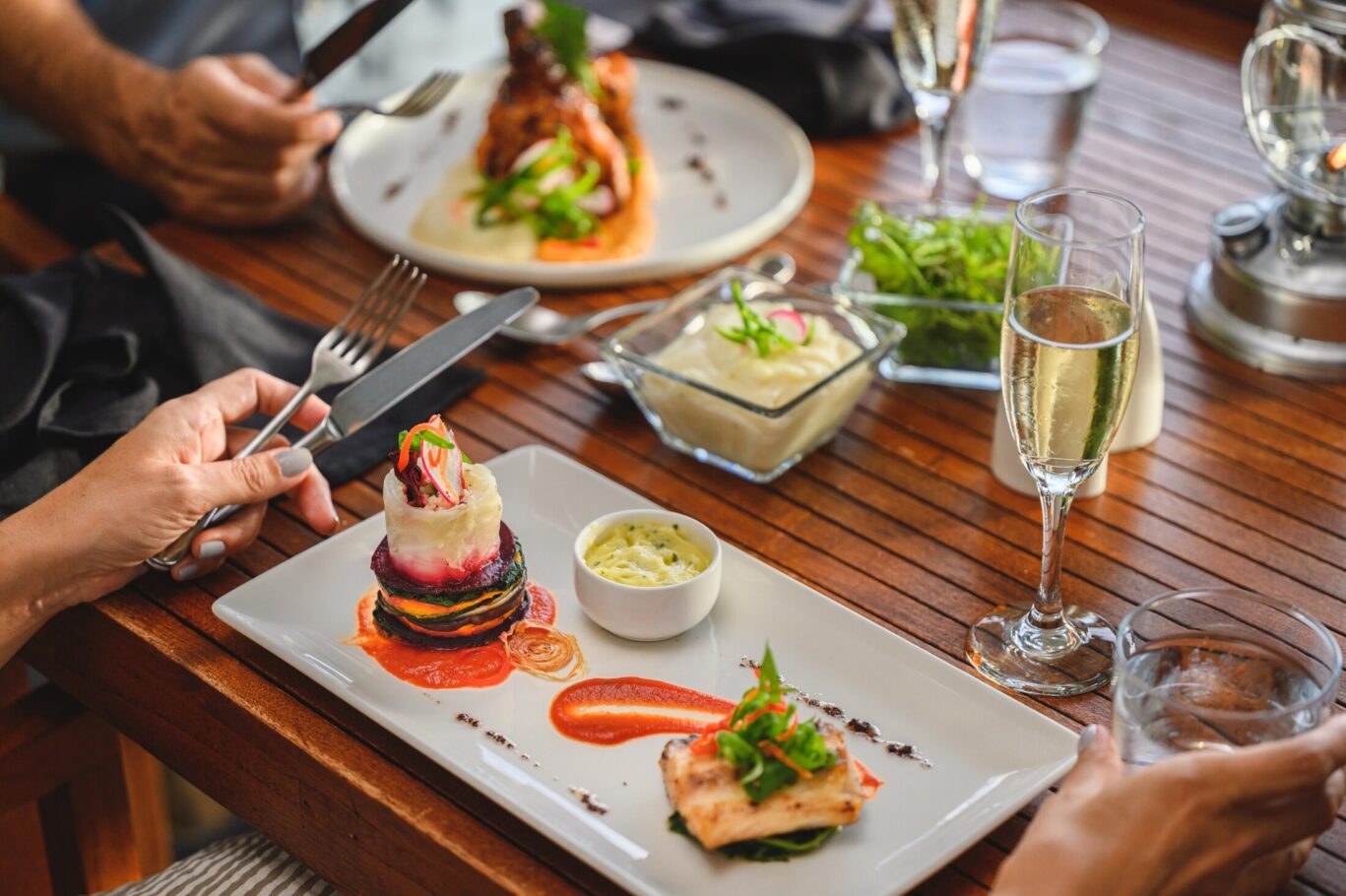
Menus evolve with produce and availability, but recent dinners show the range clearly. Potato-and-cacao gnocchi brings together capers, cherry tomatoes and vegetables; cacao-nib pesto and mole accompany Rabot Estate eggplant; rosemary cacao butter seasons mahi mahi; and cacao-infused rum and white-chocolate mash complete slow-cooked chicken.
Breakfast, lunch or dinner?
Breakfast for a quieter introduction
Breakfast suits travellers who want to see the estate in the cooler morning light or have plans elsewhere in Soufrière later in the day. Alongside familiar breakfast choices, the menu may include distinctly Rabot options such as estate-grown cacao tea, 72% Saint Lucian drinking chocolate and fresh cacao-pulp drinks.
Lunch after exploring cacao
Lunch is the simplest meal to combine with a daytime visit to Rabot Estate. You can explore cacao at Project Chocolat, then continue the story at the restaurant by seeing how chefs use the crop in a finished dish. Check what food is included with any booked experience so that you do not plan two lunches.
Dinner for the full restaurant experience
Dinner gives the kitchen the widest space to show how cacao works across several courses and is the service to book ahead for. Arriving before dark also leaves time for a drink and a clear view towards Petit Piton.
The Cacao Bar and dessert
The Cacao Bar sits within Rabot Restaurant and opens from 10:00 to 23:00, while in-house guests may stay later. You can visit for drinks or dessert without committing to a full meal, which is useful if you want the setting and cacao flavours in a shorter stop.
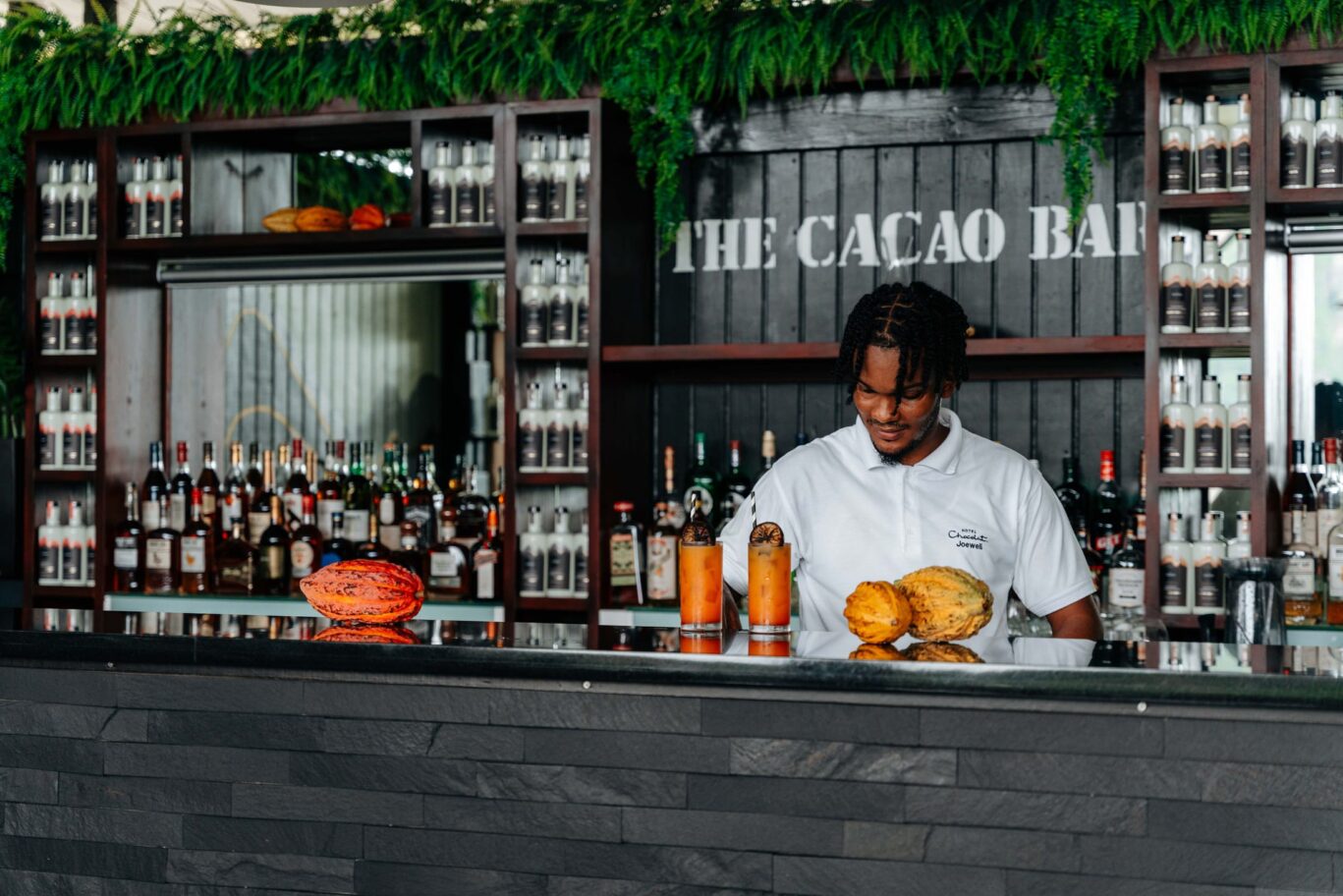
Cacao pulp is especially revealing in a drink because its fresh, tropical character is far removed from conventional chocolate. Roasted shells and nibs move in the opposite direction, adding toast, nuttiness and a dry finish. The same contrast continues through desserts: recent menus have included cacao-nib crème brûlée, tiramisu made with estate-grown chocolate and coffee, and pineapple with cacao-pulp jelly.
For a more structured afternoon visit, the team currently offers the Velvetised Afternoon Tea on selected days. Book this separately.
Plan a food-led day on Rabot Estate
Rabot Restaurant makes most sense when you can see where its central ingredient begins. Project Chocolat occupies another part of the estate and offers hands-on experiences covering cacao growing and chocolate making. A tour followed by lunch or dinner connects pod, farming and finished plate without turning the day into a rushed circuit of attractions.
If your priority is food rather than a full tour, allow time for the restaurant and Cacao Bar instead. A pre-dinner drink, two or three courses and an unhurried look towards Petit Piton can easily be the main event. The estate setting is part of the meal, not a backdrop added afterwards.
Practical tips for visiting
Practical details matter alongside the menu. Rabot is easy to plan once you know that it sits on the estate, welcomes external diners and is worth reserving ahead.
- Reserve ahead: the restaurant advises external diners to book, especially for dinner. If you are booking within 24 hours, call the team to confirm availability.
- Check the current menu: dishes change with ingredients and seasonality. Use the restaurant page for the latest breakfast, lunch, dinner, dessert and drinks menus.
- Discuss dietary requirements: current menus identify vegetarian and vegan dishes and common allergens, but guests with allergies should speak directly with the team.
- Plan transport: Rabot Estate is near Soufrière rather than in the walkable town centre. Confirm your route and return journey before an evening reservation.
- Allow time for the setting: if daylight views matter, arrive before sunset and leave room for a drink rather than timing the journey to the minute.
Details can change, so check the Rabot Restaurant page or contact the team before making a special journey.
Frequently asked questions
Yes. Rabot Restaurant welcomes non-residents. Its cacao-led menu, estate setting and view towards Petit Piton make it a destination meal near Soufrière. Book ahead, especially for dinner.
We recommend booking ahead for external diners, particularly for dinner. For requests within 24 hours, call the restaurant team directly to confirm availability.
Rabot Restaurant opens every day. It serves breakfast from 07:00 to 10:00, lunch from 12:00 to 15:00 and dinner from 18:00 to 22:00.
No. Fresh cacao pulp is fruity, roasted shells can be toasted and savoury, and nibs add texture and nutty or tannic notes. Finished chocolate appears selectively in sauces, drinks and desserts.
Current menus label dishes suitable for vegetarians and vegans. Menus change, so check the latest options and tell the team about allergies or dietary requirements when booking.
Yes. The Cacao Bar is within Rabot Restaurant, and visitors are welcome to stop for drinks or enjoy dessert in the lounge area without booking a full meal.
Rabot Restaurant looks towards Petit Piton, with rainforest around the estate. Other higher viewpoints on Rabot Estate provide broader views that can include both Pitons.
Book a table at Rabot
Rabot Restaurant stands apart for a simple reason: cacao is grown, explored and cooked on the same estate. Come for a meal, drinks at the Cacao Bar or a longer day connecting Project Chocolat with the flavours on your plate.